Somewhere around update four or five, you probably stopped checking the NBA 2K26 ratings page every two weeks and started dreading it instead. That’s the deal with 2K’s live ratings system — it’s basically your favorite player’s report card, except the teacher is a mysterious algorithm and the grades show up whether you’re ready or not.
The season’s wrapped now, so this is the full picture: every meaningful swing across the year, what triggered it, and — more usefully — what it should actually change about how you build and play your MyPLAYER. Because a ratings update isn’t just trivia. If your center’s rating philosophy shifted, your Cap Breaker priorities should shift too.
The NBA 2K26 Ratings Update Timeline, From Tip-Off to Finals
2K doesn’t just set ratings at launch and walk away. Every couple of weeks during the regular season, Visual Concepts pulls real box scores and adjusts overalls to match. It’s meant to keep the game mirroring reality — if a guy’s cooking in real life, he should be cooking in The City too.
Here’s how the year actually played out.
Early season (first update): Lauri Markkanen was one of the first big winners, climbing three points to 87 OVR after torching Phoenix for 51 in a single game — the eighth-highest scoring night in Suns franchise history. Luka Doncic picked up two points to hit 97 despite missing time with the Lakers, and Austin Reaves rode a hot stretch to 88 OVR while filling in.
Mid-season swings: Donovan Mitchell and Cade Cunningham both nudged up a point apiece off big two-week stretches — Cunningham’s bump came right after a 46-point, 12-rebound, 11-assist, five-steal, two-block triple-double, which is the kind of stat line that makes an algorithm sit up straight. Jalen Johnson quietly kept climbing all season, going from barely cracking the top 100 at launch to knocking on the door of the 90 OVR club.
All-Star window: Ratings around this stretch leaned rookie-heavy. Cooper Flagg, Stephon Castle, and Alexandre Sarr all picked up notable bumps as the first-year class started separating itself from the pack.
Kawhi’s stretch: Leonard picked up back-to-back two-point bumps across consecutive updates, eventually landing at 94 OVR after stringing together a stretch averaging 28-plus points a game for the Clippers — proof that age is just a number when your jumper still looks like that.
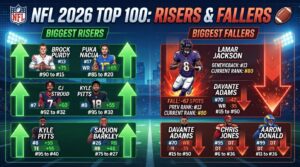
The chaos update: One update in particular turned into the community’s favorite whipping post — some players jumped as much as eight points in one cycle, while stars like LaMelo Ball and LeBron James slid. LeBron in particular had a rough back half of the season on the ratings side, dropping multiple times and settling at 92 OVR — still elite, but a long way from where he opened the year.
Late-season standouts: The two biggest stories down the stretch were Victor Wembanyama and Bam Adebayo. Wemby climbed from a 94 OVR start all the way to 97, reflecting a season where he looked like the most complete two-way big man in basketball. Adebayo picked up a bump after dropping 83 points in a single game — the second-highest single-game total in NBA history behind only Wilt Chamberlain’s 100-point game. Atlanta’s Jalen Johnson and Nickeil Alexander-Walker also got rewarded in that same cycle as the Hawks turned into a legitimate threat.
What This Actually Means For Your MyPLAYER Build
Here’s the part most ratings recaps skip entirely: none of this matters if you don’t translate it into build decisions.
If you’re building a big man, the Wembanyama and Adebayo storylines tell you what 2K is rewarding this cycle — two-way size that can switch onto smaller players and still protect the rim. If your center build is purely a rim-runner with no perimeter defense, you’re fighting the meta, not working with it.
If you’re building a guard, the story is playmaking-plus-scoring, not just one or the other. Cunningham and Mitchell’s bumps came from stat lines with real assist numbers attached, not just point totals. A pure scoring PG with a low Pass Accuracy rating gets flagged by the new Scouting Report feature for a reason — it’s telling you the same thing the real-life ratings movement is telling you.
The rookie surge matters for MyCAREER long-term planning. If you started a save this season, expect the “veteran vs. rookie” balance to keep shifting. Cap Breakers on a young build compound over a full season in a way they don’t for an already-maxed vet.
NBA 2K26 Shot Meter and Layup Timing: What Changed and Why It’s Not Optional Anymore
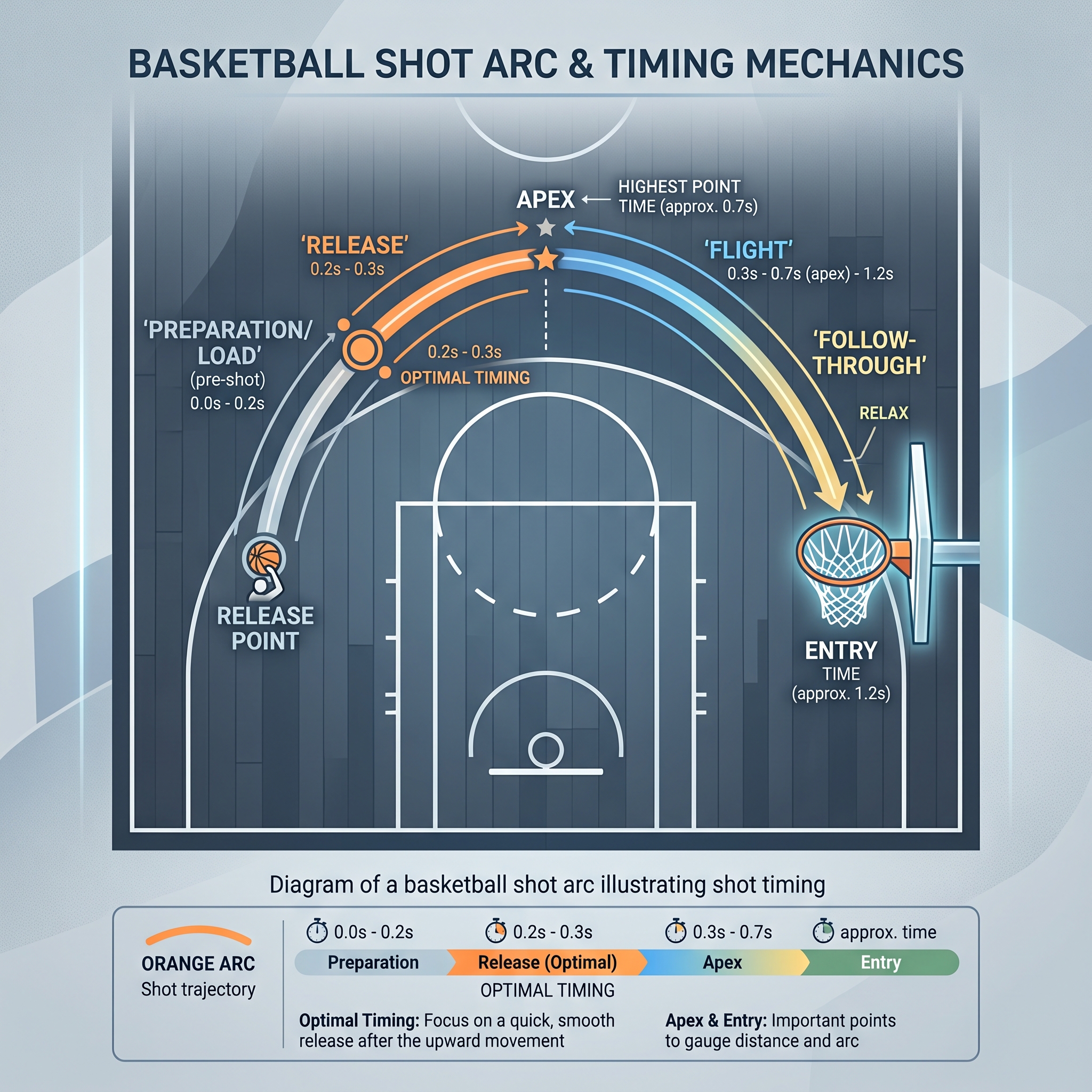
The biggest mechanical shift in NBA 2K26 didn’t come from a ratings update at all — it came from launch. Layup timing is no longer automatic. You’re now required to time finishes at the rim the same way you time jump shots, using the layup meter, and Rhythm Shooting carries through every finish type this year.
That single change is why so many players’ shooting percentages tanked in the first few weeks. Old habits — driving and mashing the finish button — just don’t work anymore.
A few things worth knowing if you haven’t adjusted your settings since launch:
- Shot Timing Visual Cue has two solid options: Push or Release. Release tends to feel more natural since it lines up with when the ball actually leaves your player’s hand.
- Meter-off shooting gives you a real green window boost once you’re comfortable with your jumper’s animation and rhythm — but it’s a genuine skill jump, not a shortcut. Don’t turn it off until you can consistently green with the meter on.
- Keep the meter on for layups and free throws even after you’ve gone meter-off for jump shots. The timing windows are different enough that mixing them early just creates bad habits.
- Contested threes are a trap. Pressured jumpers see roughly a 30% drop in make percentage this year compared to open looks, so chasing a contested triple to pad a highlight reel is costing you more than it’s worth.

Step-by-Step: Checking If a Ratings Update Actually Affects You
- Open the official 2K ratings page or the in-game notification and search your MyPLAYER’s real-world comparison, or check your favorite MyTEAM cards directly.
- Look at what attribute moved, not just the overall number. A one-point OVR bump that comes from a Playmaking jump matters differently than one from a Finishing jump — it changes which badges are realistically in reach.
- Recheck your Scouting Report in the MyPLAYER Builder after any major update. It flags weak spots based on current attribute weighting, and that weighting can shift as the meta shifts.
- Adjust your next Cap Breaker based on what’s actually being rewarded that cycle, not what you assumed at the start of the season.
- Don’t overreact to a single update. One dip doesn’t mean your build is bad — look at the trend across two or three updates before you change anything.
Meter-On vs. Meter-Off Shooting: Pros and Cons
| Meter On | Meter Off | |
| Best for | Beginners, casual play, learning new jumpers | Experienced players with consistent rhythm |
| Green window | Standard | Boosted |
| Learning curve | Low | High |
| Risk | Lower | Higher — no visual safety net |
| Recommended modes | MyCAREER story, Play Now | The Park, Rec, Pro-Am, competitive online |
Common Mistakes Players Make After a Ratings Update
Panicking over a small drop. A two-point overall dip usually reflects a rough two-week stretch, not a permanent downgrade. Don’t rebuild your whole strategy around noise.
Ignoring attribute-level changes. The overall number is the headline, but the actual attribute that moved tells you what to adjust in your own game.
Going meter-off too early. This is the single biggest self-inflicted wound in the shooting department this year. Meter-off only pays off once your muscle memory is already solid.
Sleeping on Build Specialization questlines. These were new for NBA 2K26 and a lot of players still haven’t touched them. They’re one of the more efficient ways to close attribute gaps the Scouting Report flags.
Forgetting layup timing is now mandatory. Still the number one reason casual players feel like their finishing “got worse” this year. It didn’t get worse — it got harder, on purpose.
Expert Tips for Staying Ahead of Ratings Shifts
- Treat every ratings cycle as a signal, not just a scoreboard. If a playstyle keeps getting rewarded across multiple updates, that’s the meta telling you where to invest.
- Run MyCourt drills specifically targeting whatever attribute your Scouting Report flags — 50 to 100 focused reps is enough to notice a real difference in your consistency.
- Warm up before ranked sessions. Players who run a short shooting warmup before competitive games report noticeably better in-game accuracy than those who queue up cold.
- Check locker codes weekly, not just when you remember. NBA 2K26 currently has active codes worth grabbing, including GAME-7-DREAM for a G.O.A.T. Hakeem Olajuwon card and BRUNSON-FINALS-MVP for a Finals MVP Jalen Brunson card — both free, both easy to miss if you’re not checking regularly.
- If you’re jumping into Season 7 content, know that it’s built around Angel Reese and brings fresh MyCAREER rewards and MyTEAM cards, plus continued WNBA integration across MyTEAM lineups.
FAQs
How often does NBA 2K26 update player ratings? Roughly every two weeks during the NBA regular season, based on real-world performance over that stretch. Updates typically slow down or stop once the real NBA season ends.
Why did my favorite player’s rating go down in NBA 2K26? Ratings updates reflect recent real-world performance, not season-long averages. A rough two-week stretch — even for a star player — can trigger a drop, and it usually corrects itself if their play does.
Is meter-off shooting worth it in NBA 2K26? Yes, but only once you’re consistently green with the meter on. Meter-off gives a real boost to your window, but it removes your visual safety net entirely, so it rewards players who already know their jumpshot’s rhythm by feel.
Why is layup timing suddenly hard in NBA 2K26? Because it’s no longer automatic. This year requires timing every layup with the meter, the same way jump shots work, which is why finishing feels tougher even for veteran players.
What’s the best point guard build in NBA 2K26? The strongest builds balance scoring and playmaking rather than maxing one at the expense of the other — a high Pass Accuracy rating alongside solid three-point shooting tends to outperform pure-scorer builds in both MyCAREER and competitive online modes.
Do NBA 2K26 locker codes expire? Most do, usually within about a week of release, though a handful are marked as permanent. Codes are one-time use per account, so double-check you haven’t already redeemed one before assuming it’s broken.
What is NBA 2K26 Season 7? The current seasonal content cycle, headlined by Angel Reese, bringing new MyCAREER rewards, fresh MyTEAM cards, and continued crossover content between NBA and WNBA rosters.
Final Verdict
NBA 2K26’s ratings system did exactly what it’s supposed to do this year — it tracked the real NBA close enough that Wembanyama’s climb to 97 and Adebayo’s historic 83-point night both showed up right where you’d expect. The mistake most players make is treating these updates as background noise instead of a build roadmap. If you’re still running the same MyPLAYER settings and Cap Breaker priorities from week one, you’re playing a different game than the one 2K is actually rewarding right now. Adjust with the updates, not after them.