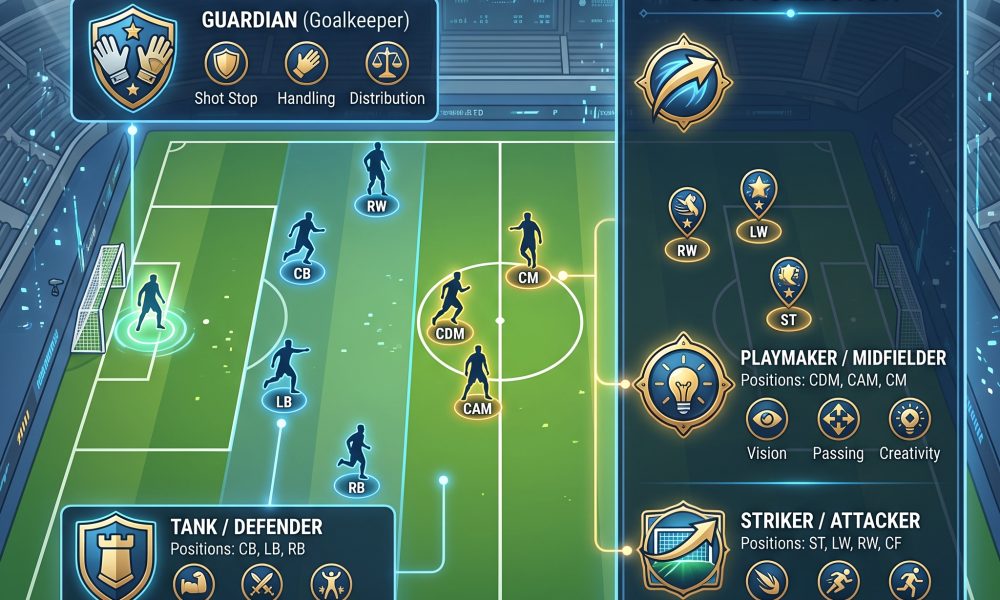
Remember spending your first three hours in Clubs just staring at a skill tree, trying to figure out if Finesse Shot or Trivela was worth the points? Gone. EA ripped the whole thing out for FC 26 and replaced it with something that plays a lot more like an RPG class system than a stat allocator. You don’t build a player from a blank sheet anymore — you pick who you want to be first, then grow into it.
That’s a bigger deal than it sounds. Skill trees let you eventually become anything if you had the points. Archetypes don’t work that way. Pick Finisher and you’re not casually pivoting into a Maestro playmaker later — you’re committing to a lane, and the game is built around that commitment. Here’s everything that actually matters about the system, position by position, plus how to level without wasting your first few weeks.
Why EA FC 26 Archetypes Replaced the Skill Tree
The old Clubs progression let you unlock PlayStyles more or less freely once you had enough points, regardless of what kind of player you were building. It worked, but it also meant every maxed-out Pro started to feel the same — just a stat stick with whatever PlayStyles happened to be meta that year.
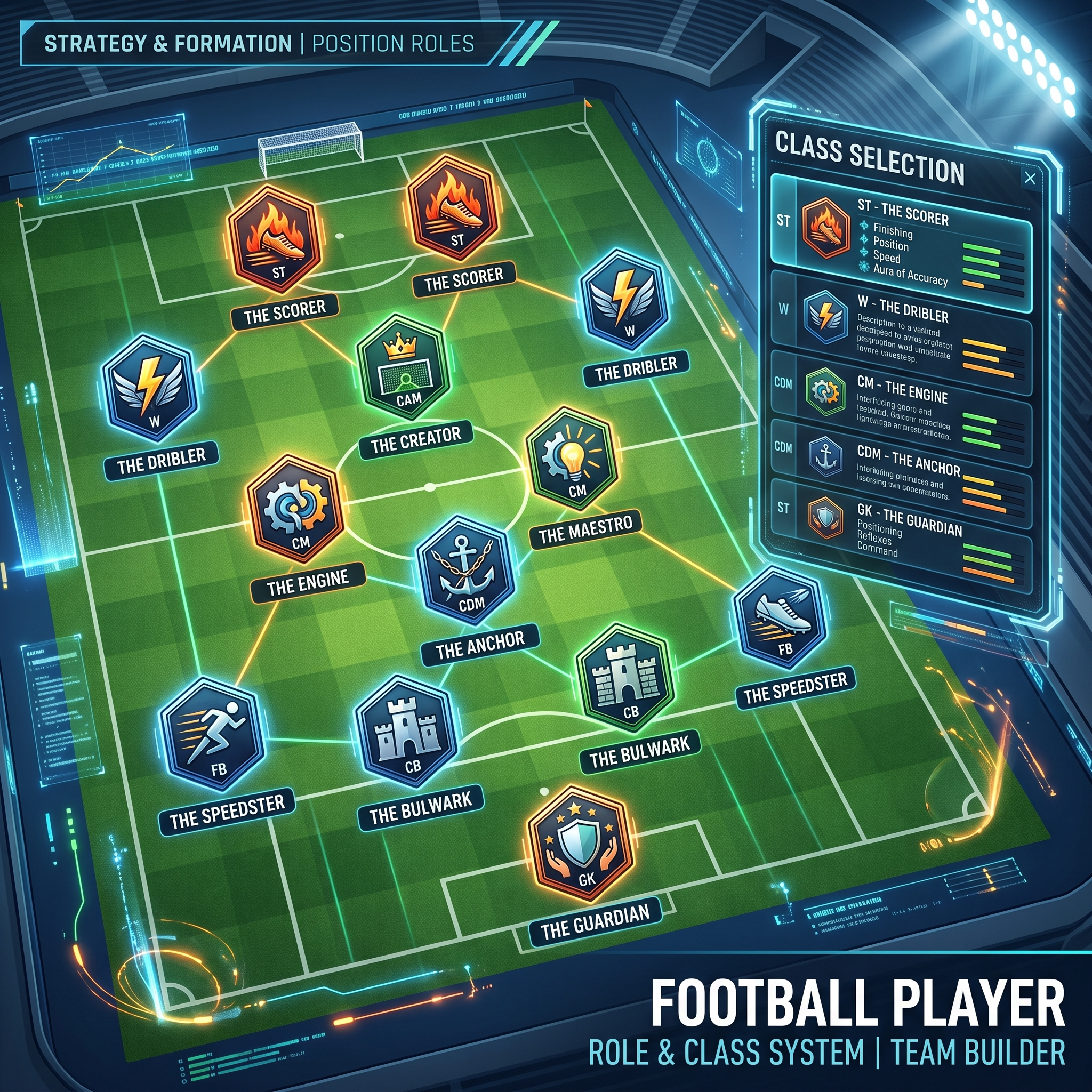
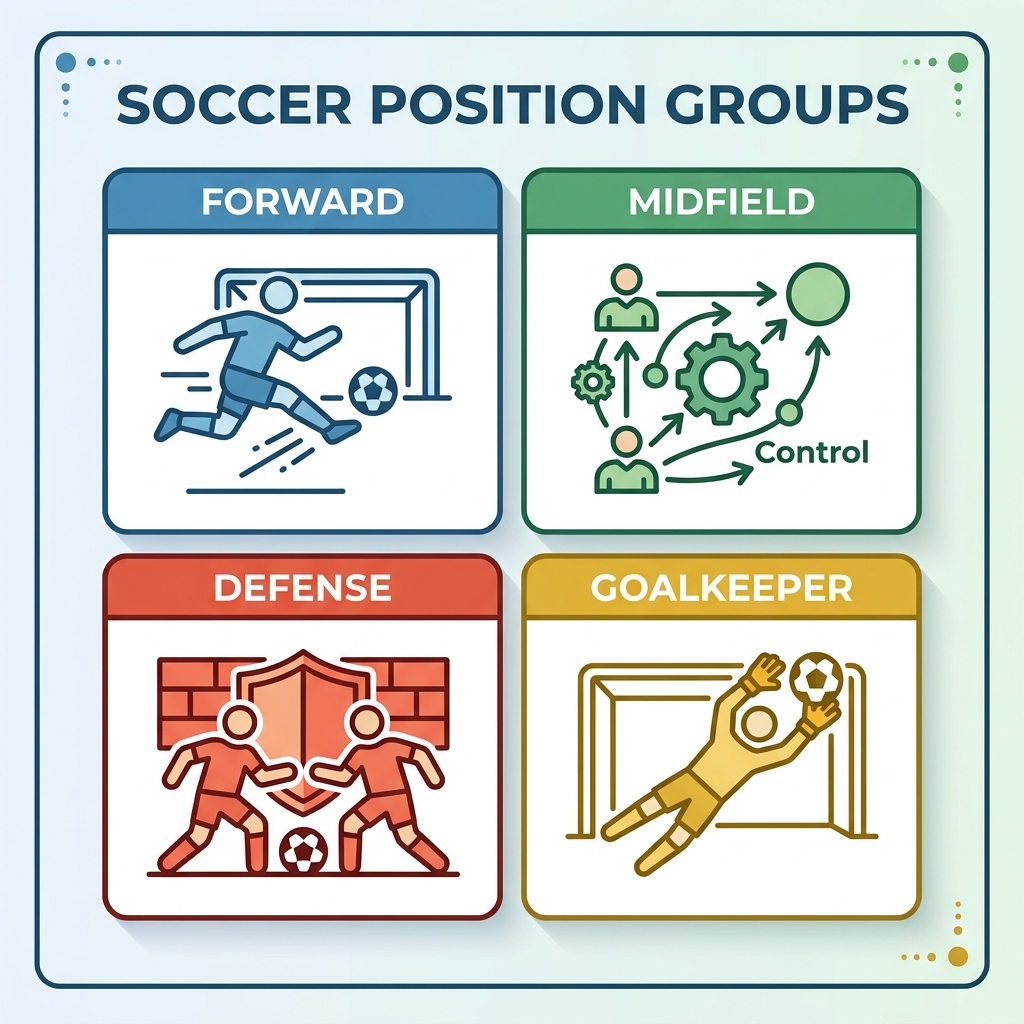
Archetypes flip that. There are 13 total, split across four position groups, and each one is modeled loosely after a real footballing icon’s style rather than just a stat template. You start with one for free. The other twelve get unlocked with Club Coins, FC Points, or Archetype Unlock consumables you earn through Season Pass progression and objectives.
Each Archetype comes with Signature PlayStyles baked in from the start — no more grinding toward a PlayStyle everyone already knows you’re going to pick. As you level up, those Signature PlayStyles upgrade into PlayStyle+ versions, and you unlock additional customizable PlayStyle slots on top. Every Archetype also has four “key attributes” that cost fewer points to upgrade than the rest of your stat sheet, which is EA’s way of nudging you to actually commit to the role instead of trying to max everything.
The Full EA FC 26 Archetypes List, By Position
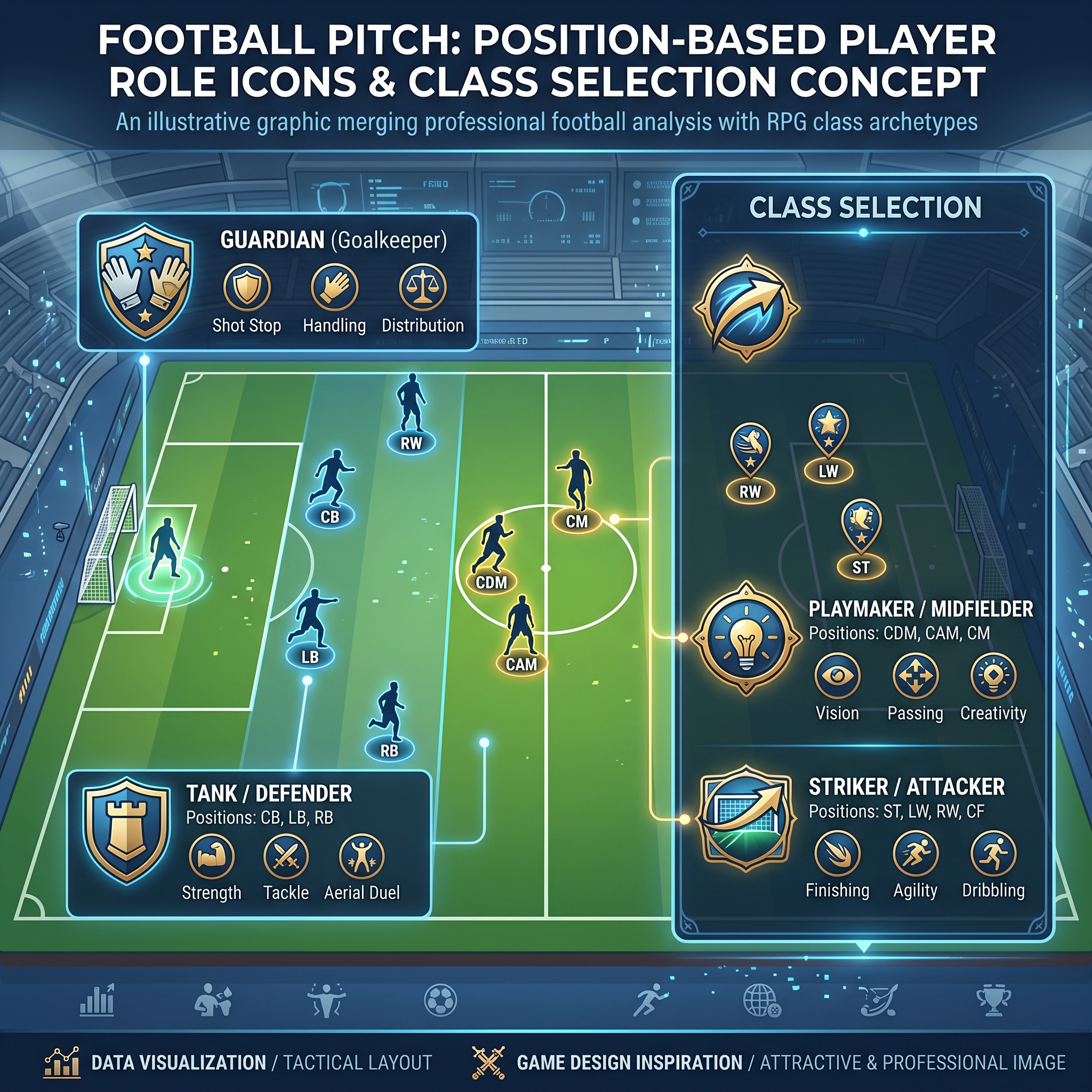
Forwards (3 Archetypes)
- Finisher — the closest thing to an all-around striker. Fast, clinical in the box, built around Low Driven Shot and First Touch.
- Magician — the technical dribbler. Best suited to wingers and creative strikers who want Finesse Shot and elite ball control over raw physicality.
- Target — the tall, physical number 9. Built for hold-up play and heading, with Power Shot and Precision Header as its calling cards.
Midfielders (4 Archetypes)
- Recycler — the ball-winning, ball-recycling defensive mid. Built to intercept, tackle, and get the ball moving again quickly.
- Maestro — the deep-lying playmaker. Long passing range, tempo control, built to switch play and launch attacks from deep.
- Creator — the final-third playmaker. Specializes in incisive through balls that unlock organized defenses.
- Spark — the wide, pacey attacking midfielder. Built around dribbling and crossing from wide areas.
Defenders (4 Archetypes)
- Progressor — the modern ball-playing center-back who steps into midfield and starts attacks with progressive passing.
- Boss — the classic physical center-back. Wins duels, dominates in the air, anchors the back line.
- Engine — the stamina-built defender, equally viable at center-back or full-back, built to cover ground all match long.
- Marauder — the attacking full-back. Fast, aggressive, built to overlap and support the attack while still holding up defensively.
Goalkeepers (2 Archetypes)
- Shot Stopper — the traditional keeper, focused on reflex saves and one-on-one situations.
- Sweeper Keeper — the modern, ball-playing keeper who’s comfortable rushing off his line and starting attacks.

Best EA FC 26 Archetype for Strikers
This is the question everyone’s actually searching, so let’s not bury it.
For pure output, Finisher is the safest and strongest pick for most strikers. It gives you Low Driven Shot from the jump, which is still one of the most reliable finishing PlayStyles in the game, and its later Signature Perks — Fake to Real and 1v1 Master — reward well-timed fakes against the keeper with boosts across your finishing attributes. If you’re the type of player who wants to just be dangerous in the box without overthinking your build, Finisher is close to foolproof.
Magician is the better pick if you’re more of a creative, technical forward — someone who drops deep, links play, and wants to be a threat from distance as much as inside the area. Its Finesse Shot and Technical PlayStyles make it genuinely lethal for both strikers and wingers, and a lot of top Clubs players actually run Magician over Finisher once they’ve got the technical attributes to back it up.
Target is the weakest of the three right now. Heading and aerial duels just aren’t rewarded the way they used to be in FC 26’s engine, and while a tall physical striker can still work in a specific system built around crossing, it’s a much narrower path than the other two Archetypes offer. Unless your whole Club is built around crossing into the box, skip it.
FC 26 Clubs Progression System: How AXP Actually Works
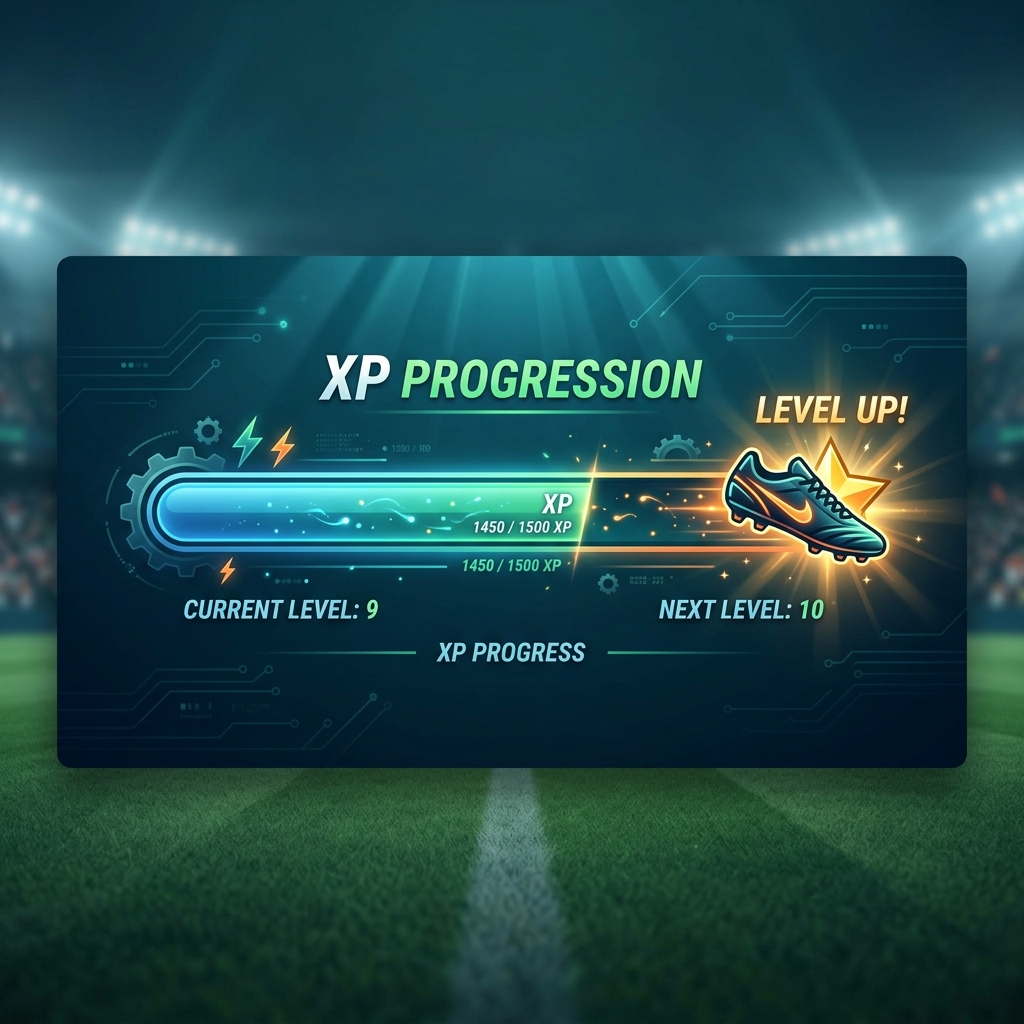
Archetype XP, or AXP, is the currency that levels your Archetype from 1 to 50 (with EA confirming the cap will rise in later seasonal updates). A few things determine how much you earn per match:
- Role Rating is the biggest factor by far. Play your position well — score as a striker, defend as a center-back, create chances as a CAM — and your AXP scales with it.
- Gameplay actions matter too, just less. Passes, tackles, dribbles, and shots all contribute incrementally.
- Match type changes your payout. League and Playoff matches consistently pay more AXP than Friendlies or Drop-Ins, and Rush tends to pay noticeably less than full 11v11 — some players have clocked Rush matches earning as little as a fifth of what a strong League performance nets.
- Skill Games give you a capped amount of AXP each week — useful as a top-up, not a replacement for match XP.
The attribute points (AP) you earn from leveling get spent on stats, and here’s the part a lot of guides gloss over: your Archetype’s four key attributes cost less AP to raise than everything else. That’s not a minor detail — it’s the entire efficiency engine of the system. Dump early AP into stats outside your key attributes and you’re paying a tax for no real reason.
Step-by-Step: Leveling Your Archetype Efficiently
- Pick one Archetype and commit early. Every Archetype levels independently, so bouncing between two or three at once just means none of them get anywhere fast.
- Spend Instant AXP consumables immediately if you have them. These are only usable up to Level 25, so sitting on them is a wasted resource.
- Prioritize League and Playoff matches over Drop-In and Rush once you’re past the early consumable boost — the AXP-per-match rate is simply better.
- Play your role, not just the ball. A striker chasing assists all game is leaving Role Rating AXP on the table. Lean into what your Archetype actually rewards.
- Use Skill Games weekly, not sporadically. The weekly cap resets whether you use it or not, so an unused Skill Games session is AXP you’ll never get back.
- Spend AP on your key attributes first, then branch into secondary stats once your role’s core numbers are near their cap.
FC 26 Multiple Clubs Feature: What Changed
One of the more player-friendly changes this year: you can now belong to up to three Clubs at once and freely switch between them. That’s a real quality-of-life fix for anyone whose regular squad doesn’t always have a full lobby — you’re no longer stuck waiting around or leaving your main Club just to get a game in with a second group of friends.
The catch is that only one Club can be marked as your favorite, and that’s the only one that counts toward seasonal rewards. So if you’re playing across multiple Clubs, make sure the one you actually care about progressing is the one you’ve flagged — it’s an easy setting to forget about until reward season rolls around and you realize half your games didn’t count.
Meter-Free Progression vs. Consumable-Boosted: Pros and Cons
| Pure Match Grinding | Using AXP Consumables | |
| Speed to Level 25 | Slow, several sessions | Fast, near-instant |
| Cost | Free (just time) | Club Coins or FC Points |
| Skill development | Higher — you learn the role by playing it | Lower early on, since levels come without reps |
| Best for | Players with time to grind | Players catching up mid-season or short on time |
| Long-term viability | Fine either way past Level 25 | Same — consumables stop being usable past Level 25 |
Common Mistakes Players Make With Archetypes
Unlocking too many Archetypes at once. It feels efficient to grab three or four early, but AXP spread across multiple Archetypes just means all of them level slowly. Pick one, level it meaningfully, then branch out.
Ignoring the four key attributes. Spending AP evenly across your whole stat sheet instead of prioritizing your Archetype’s cheaper key attributes is the single biggest efficiency mistake in the new system.
Grinding Rush for AXP. It’s fun, but it’s genuinely one of the worst AXP-per-hour modes in the game. If leveling is your goal this week, League and Drop-In matches are the better use of your time.
Forgetting to set a favorite Club. If you’re using the new Multiple Clubs feature, not designating a favorite means your seasonal progress in your other Clubs quietly doesn’t count for rewards.
Choosing Target for a striker build without a crossing-heavy team around you. It’s not a bad Archetype in a vacuum, but it depends on service that most random Clubs squads simply don’t provide consistently.
Expert Tips for Getting the Most Out of Archetypes
- If you’re rebuilding a Pro from FC 25, don’t assume your old PlayStyle habits translate directly — Archetypes reward playing your defined role, not just playing well in general.
- Check your Archetype’s attribute requirements before committing AP to a PlayStyle you want in a customizable slot — missing a threshold by a couple of points is a common and avoidable waste.
- If your Club leans heavily on crossing, Target and Marauder are a legitimately strong pairing that a lot of guides underrate because they’re built around a team system, not solo highlight plays.
- Save some AP in reserve heading into a new season. EA has already signaled level caps and upgrades will expand further, so early over-investment in maxed-out stats can leave you short when new tiers open up.
FAQs
How many Archetypes are there in EA FC 26? There are 13 total: 3 for forwards, 4 for midfielders, 4 for defenders, and 2 for goalkeepers. You unlock one for free and the rest through Club Coins, FC Points, or consumables.
What replaced the skill tree in EA FC 26 Clubs? The Archetype system. Instead of freely unlocking PlayStyles from a shared tree, you now choose a specific Archetype that defines your Pro’s identity, attributes, and available PlayStyles from the start.
What is the best Archetype for a striker in EA FC 26? Finisher is the most reliable all-around pick for most strikers, thanks to its Low Driven Shot and finishing-focused perks. Magician is the stronger choice for a more technical, creative forward.
How does AXP work in EA FC 26? AXP, or Archetype XP, is earned primarily through your Role Rating in matches, with smaller contributions from individual actions. League and Playoff matches pay more AXP than Friendlies, Drop-Ins, or Rush.
Can you switch Archetypes in EA FC 26? Yes, but each Archetype’s progress is tracked separately, so switching means starting that Archetype’s level from scratch. It’s better to unlock a second Archetype once your first is well-developed rather than switching outright.
How many Clubs can you join in EA FC 26? Up to three at once, with the ability to switch freely between them. Only one Club can be set as your favorite, and only that one counts toward seasonal rewards.
What’s the fastest way to level an Archetype in FC 26? Use Instant AXP consumables early since they’re capped at Level 25, then shift to League and Drop-In matches with high Role Ratings, topping up with weekly Skill Games.
Final Verdict
Killing the skill tree was a genuinely bold call, and it mostly pays off. Archetypes force you to actually be something on the pitch instead of slowly becoming a generic maxed-out stat stick, and the AXP system rewards players who commit to a role instead of chasing highlight-reel moments outside their position. The tradeoff is real, though — this system punishes indecision. Pick an Archetype, level it with intent, and you’ll feel the difference within a couple of weeks. Spread yourself thin across three half-built Archetypes and you’ll spend the whole season wondering why nothing feels finished.